When Tests Are Normal But You Feel Constantly Bloated — You Need to Release Your Rigid Stomach

🧾 Answer First | Core Conclusion
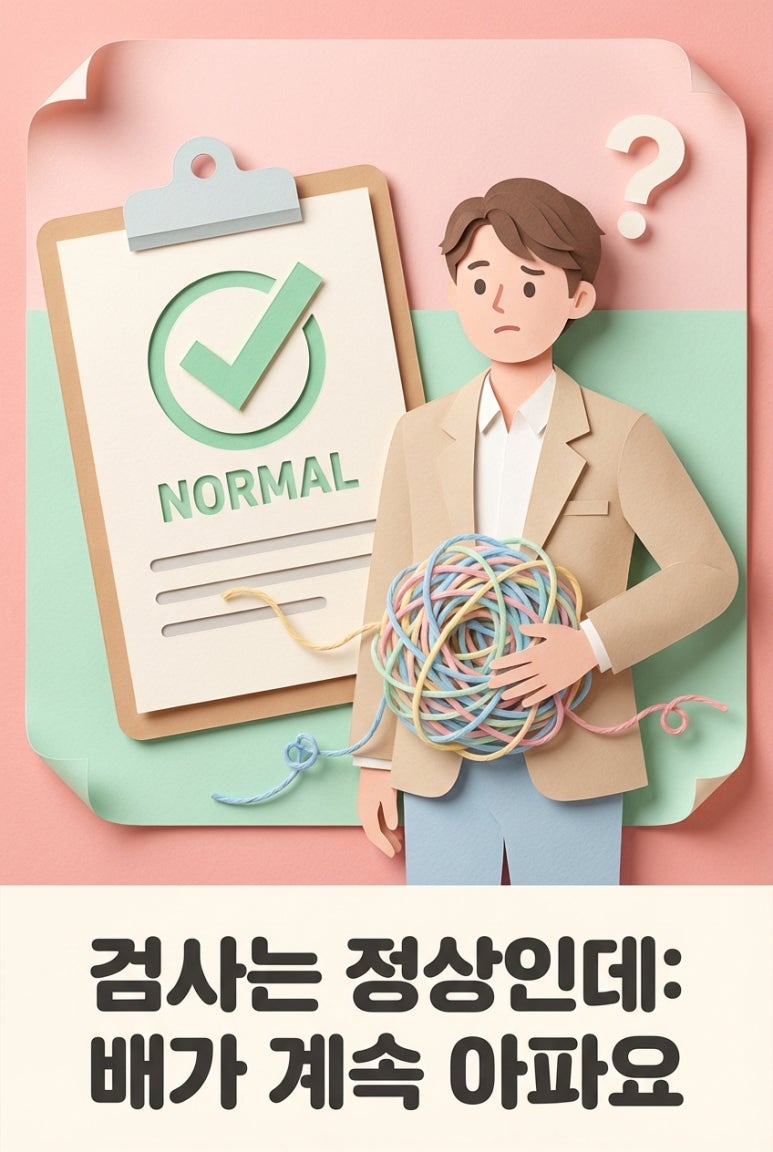
"My endoscopy is normal, blood tests are clean, but I always feel bloated."
You probably heard "it's stress-related" and left it at that.
I'm Choi Jang-hyuk, director of Dongjedang Korean Medicine Clinic.
The reason it doesn't show up in tests is different.
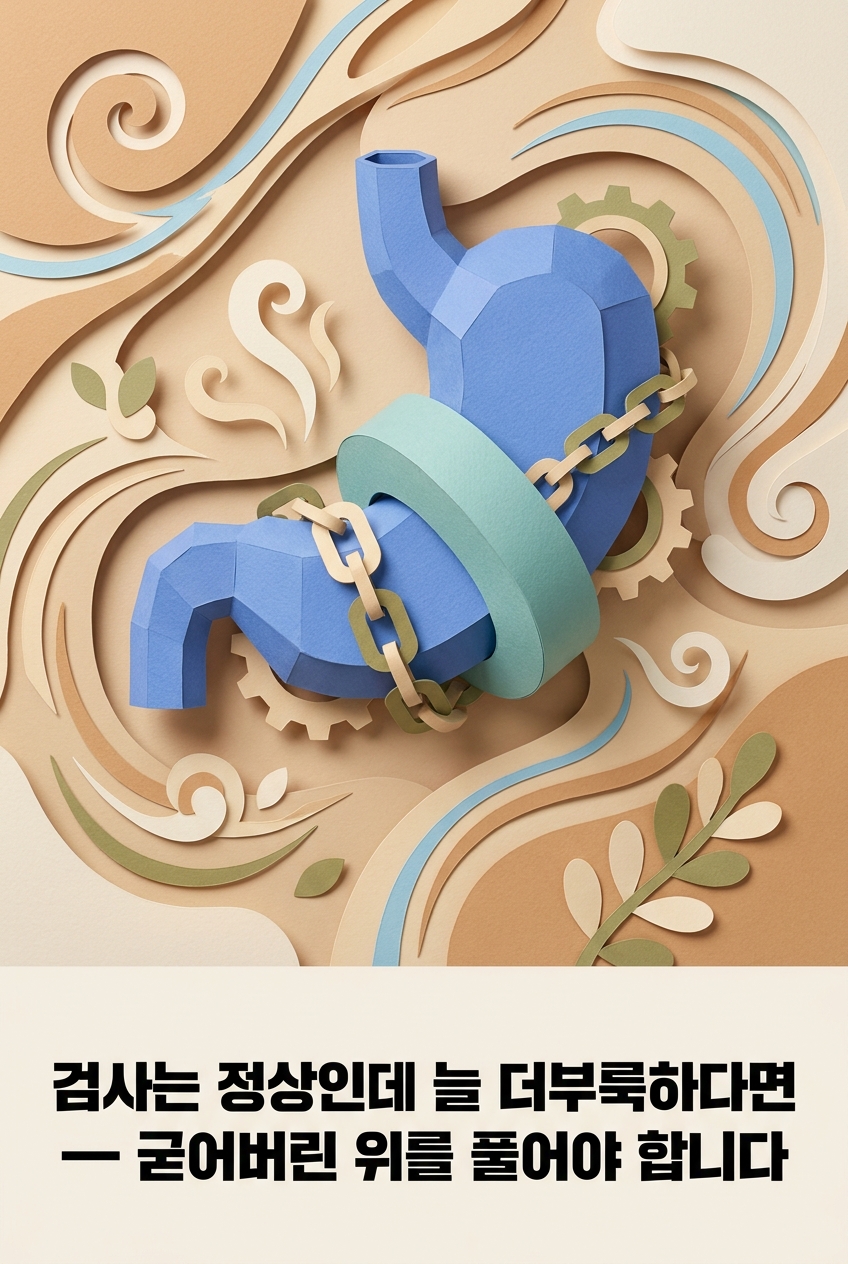
It's not that your stomach is wounded — your stomach's movement has become rigid.
A rigid stomach photographs perfectly normally.
Let me address three things that relax that rigid stomach.
✅ Action | Immediate Steps
1️⃣ Reduce each meal to 2/3 and eat more frequently
A rigid stomach doesn't stretch well even when food enters. If you put your normal portion in at once, it just stays stuck. When you reduce portions and divide them up, your stomach only receives what it can handle. Even with the same daily food intake, you'll feel much less bloated.
2️⃣ Reduce cold foods and cold water — eat warm
When cold things enter, your stomach slows down further. Don't have cold water, iced coffee, or cold fruit on an empty stomach. Start with warm soup or tea to warm up your stomach first. A warmed stomach starts moving again.
3️⃣ Take a pause before eating
If you eat while tense, your stomach stops working. This is why you get indigestion when stressed. Before your first bite, exhale deeply once and begin. You're signaling your stomach: "Now it's time to work."
If bloating remains unchanged even after doing these three things for 2 weeks, it's faster to identify what's stuck and rigid in your stomach.
🚨 Warning | Red Flags You Must Check
This article is for those who've been told their tests are normal.
If you have the following signs, testing comes before herbal medicine treatment.
✔ Unintentional weight loss
If you've lost weight without trying to diet and feel dizzy, you need to investigate other causes first.
✔ Difficulty swallowing
If swallowing is difficult or you feel food catching in your throat, testing takes priority.
✔ New symptoms after age 55
If indigestion started for the first time at that age, you should get an endoscopy first.
✔ Black stools or vomiting blood
If your stool has been black or you've vomited blood, go to the hospital immediately.
If any of these apply, it may not be a rigid stomach but a different cause.
🧠 The Why | Root Cause Analysis
Let me explain what "stomach rigidity" means.
Explanation | Western Medical Perspective
Western medicine sees two things:
One is that the stomach's speed in pushing food downward has slowed.
The other is that when food enters, the stomach doesn't stretch smoothly.
That's why you feel full with just a little food.
Added to this, the stomach and intestines become sensitive, and tension further stops their movement.
This is because the brain and stomach are connected in one line.
Explanation | Korean Medicine Perspective
Korean medicine views this rigidity as weakened spleen-stomach function and liver tension pressing down on the stomach.
When undigested food debris (food stagnation) accumulates, the stomach becomes heavier.
It's like someone carrying a heavy load walking poorly.
This weight meets dieting here.
When excess accumulates in the stomach, two things happen together.
The stomach becomes heavy and dull, so you always feel bloated, and that excess stays in your body as fat.
Bloating and weight that won't drop aren't separate problems — both come from the same excess that made your stomach heavy.
That's why detox dieting that reduces that excess lightens your stomach.
A lightened stomach starts moving again.
Just as thawed dough that stopped moving starts flowing again when warmed, your stomach's movement comes back to life.
The process of weight loss and feeling lighter inside are one stream.
Digestive aids don't lighten this weight.
Gasmotin or Motilium just temporarily whip your rigid stomach to make it move.
It's like telling someone to walk harder while still carrying the same heavy load.
This is why you feel better only while taking the medicine and it gets rigid again when you stop.
When the same excess pushes the stomach backward, it appears as reflux, and that story is covered in "the same root, different manifestations" article.
Bloating is what that excess pressing down on the stomach looks like.
📊 Proof | Case Examples and Evidence
There was a woman in her late 30s, a working professional. Her endoscopy was normal, her epigastrium was always stuffy, and she felt full with just a little food. She always carried digestive medicine in her bag. She said, "They say it's stress-related, but even with medicine it doesn't help."
I first ask where the tension comes from.
When reports piled up in the afternoon, her epigastrium was always blocked; she ate lunch in 10 minutes while tense, and ate dinner all at once after releasing her tension.
She was in a place where her stomach wasn't getting the signal to work.
It wasn't that she managed poorly — she lived a day that made her stomach rigid.
When we reduced the excess, first the drowsiness and heaviness that came after meals decreased.
This was because her stomach started pushing food down faster.
Next, the full feeling from eating just a little released, and she noticeably had fewer incidents of indigestion on tense days.
She didn't change — her rigid stomach relaxed.
Acupuncture also helps.
Research shows that those receiving acupuncture three times weekly had better bloating and quality of life than those receiving it once weekly, with effects lasting up to 8 weeks.
It works toward reviving the movement of a rigid stomach.
🔚 Closing | Summary and Encouragement
Constant bloating and weight that won't drop aren't two separate diseases.
They're two manifestations coming from one excess that made your stomach heavy.
When that same excess pushes the stomach backward, it becomes reflux — seeing that different manifestation of the same root helps you understand the whole picture.
If you want to address both bloating and weight in one place, explore the Dongjedang Detox and Diet Program, or if digestive symptoms are more urgent, check the digestive care services and feel free to contact us.
✍️ Reviewed by Choi Jang-hyuk, Director of Dongjedang Korean Medicine Clinic
❓ FAQ
Q. Why am I always bloated when tests are normal?
Even without stomach wounds or inflammation, when movement becomes rigid, bloating occurs. Your stomach pushes food down slowly or doesn't stretch smoothly as food enters. Since it's a movement problem, not a structural one, it doesn't show on images.
Q. Is postprandial sleepiness and lethargy also due to digestion?
When food stays long in a rigid stomach, your body uses energy extensively for digestion. That's why postprandial drowsiness and heaviness follow. When your stomach moves well again, this postprandial sleepiness often decreases together.
Q. If I have indigestion when tense, can herbal medicine help?
Tension stops stomach movement because the stomach and brain are connected in one line. When we relax the stomach's dullness and address the loop of tension pressing on the stomach together, indigestion on tense days decreases.
Q. If weight loss isn't my goal, is the treatment the same?
Yes. Even if you're not trying to lose weight, if your stomach is heavy from excess, the principle of reducing it is the same. We only adjust the intensity of weight loss to match your constitution and lifestyle.
📚 References
[Western Medicine (WM)]
[1] Rome Foundation. Rome IV Criteria — Functional Dyspepsia (PDS/EPS)
[2] Ford AC, et al. Functional dyspepsia. Lancet 2020
[3] Moayyedi P, et al. ACG/CAG Clinical Guideline: Management of Dyspepsia. Am J Gastroenterol 2017
[Korean Medicine (KM)]
[4] Tang KY, et al. Acupuncture Frequency and Functional Dyspepsia. 中國針灸 2023;43(6):622-6
[5] Korean Association of Oriental Internal Medicine. 『Functional Dyspepsia Korean Medicine Standard Clinical Practice Guidelines』 (Yugyuja-tang Motillin and Ghrelin Mechanism)
[6] Liao X, et al. Combined Acupuncture Treatment Network Meta-analysis — Warm Acupuncture and Motillin. Complement Ther Med 2024;82:103051